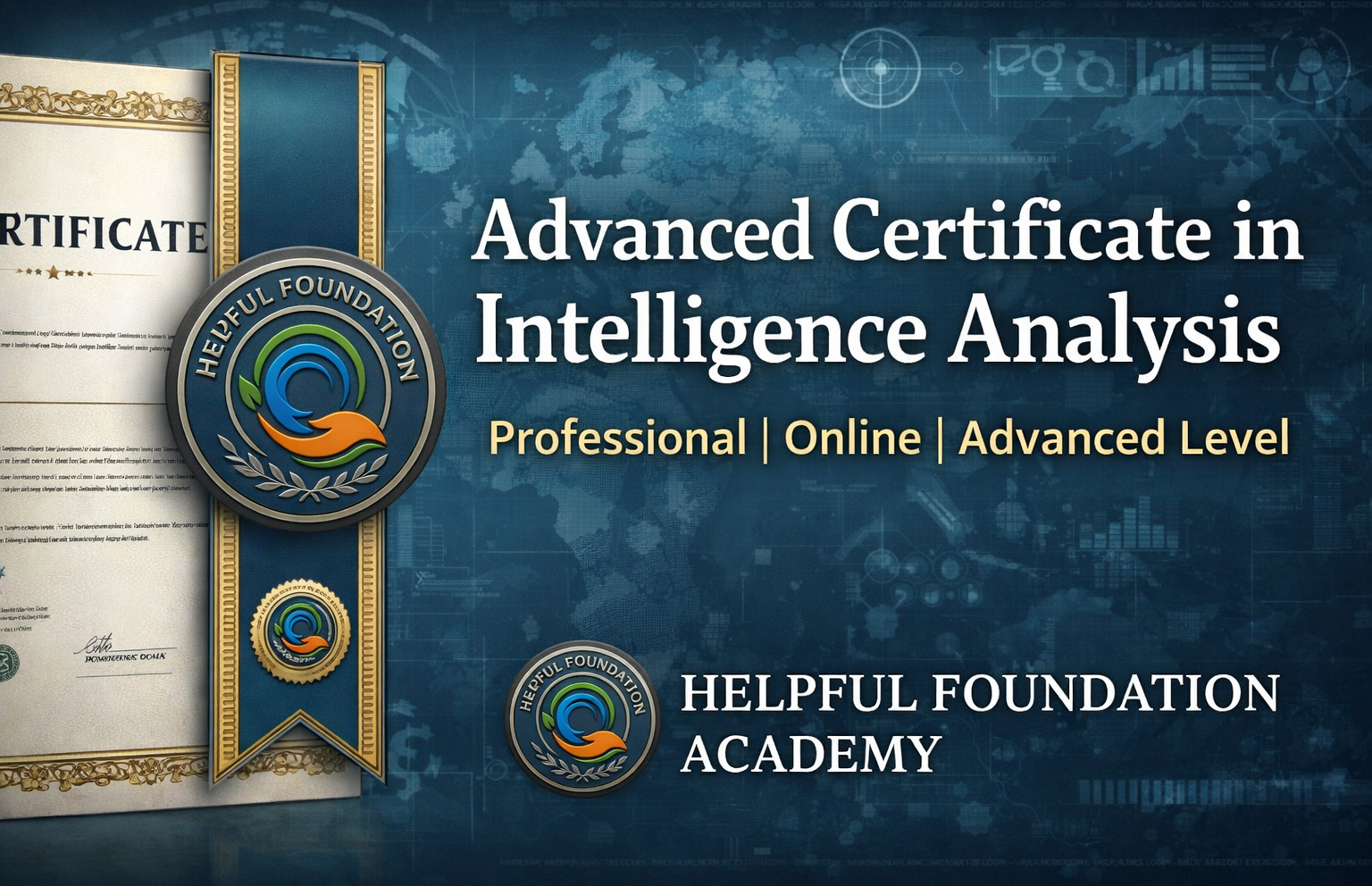
Advanced Certificate in Intelligence Analysis (ACIA)

- 15 Sections
- 77 Lessons
- 1 Quiz
- 8h Duration
📘 MODULE 1: Foundations of Intelligence Analysis
📘 MODULE 2: Intelligence Cycle for Analysts
📘 MODULE 3: Structured Analytic Techniques (SATs)
📘 MODULE 4: Cognitive Bias & Analytical Psychology
- 📗 LESSON 4.1: Understanding Cognitive Bias in Intelligence Analysis
- 📗 LESSON 4.2: Confirmation Bias and Mirror Imaging
- 📗 LESSON 4.3: Heuristics and Time-Pressure Decision Making
- 📗 LESSON 4.4: Debiasing Techniques and Analytical Discipline
- 📗 LESSON 4.5: Analyst Self-Awareness and Professional Judgment
📘 MODULE 5: Intelligence Collection for Analysts (Multi-Source)
- 📗 LESSON 5.1: Role of Collection in Intelligence Analysis
- 📗 LESSON 5.2: Open-Source Intelligence (OSINT) Evaluation
- 📗 LESSON 5.3: Digital and Cyber Intelligence Interpretation (Analyst View)
- 📗 LESSON 5.4: GEOINT and Imagery Analysis (Analyst Perspective)
- 📗 LESSON 5.5: Human Reporting Assessment (Non-Operational)
- 📗 LESSON 5.6: Source Reliability, Deception, and Misinformation
📘 MODULE 6: Threat & Risk Analysis
📘 MODULE 7: Link, Network & Pattern Analysis
📘 MODULE 8: Intelligence Fusion & All-Source Analysis
📘 MODULE 9: Strategic & Geopolitical Intelligence Analysis
- 📗 LESSON 9.1: Introduction to Strategic Intelligence
- 📗 LESSON 9.2: State Behavior and Strategic Intent Analysis
- 📗 LESSON 9.3: Geopolitical Risk and Strategic Competition
- 📗 LESSON 9.4: Military and Non-Military Power Indicators
- 📗 LESSON 9.5: Policy Impact and Strategic Forecasting
- 📗 LESSON 9.6: Long-Term Strategic Warning
📘 MODULE 10: Intelligence Analysis in Crisis Situations
- 📗 LESSON 10.1: Nature of Crisis and Intelligence Challenges
- 📗 LESSON 10.2: Rapid Analysis Under Uncertainty
- 📗 LESSON 10.3: Managing Information Overload and Fog of War
- 📗 LESSON 10.4: Escalation and De-escalation Signals
- 📗 LESSON 10.5: Decision Support During Crises
- 📗 LESSON 10.6: Post-Crisis Review and Analytical Learning
📘 MODULE 11: Ethics, Law & Accountability in Intelligence Analysis
📘 MODULE 12: Intelligence Reporting & Briefing
- 📗 LESSON 12.1: Purpose and Principles of Intelligence Reporting
- 📗 LESSON 12.2: Intelligence Report Structures
- 📗 LESSON 12.3: Estimative Language and Probability Terms
- 📗 LESSON 12.4: Confidence Statements and Caveats
- 📗 LESSON 12.5: Executive, Policy, and Board Briefings
- 📗 LESSON 12.6: Visual Intelligence and Data Storytelling
📘 MODULE 13: Advanced Analytical Writing & Forecasting
- 📗 LESSON 13.1: Principles of Advanced Analytical Writing
- 📗 LESSON 13.2: Strategic Assessments and Estimates
- 📗 LESSON 13.3: Warning Intelligence Products
- 📗 LESSON 13.4: Futures Analysis and Alternative Scenarios
- 📗 LESSON 13.5: Metrics for Forecast Accuracy
- 📗 LESSON 13.6: Improving Analytical Performance Over Time
📘 MODULE 14: Capstone – Intelligence Analysis Project
- 📗 LESSON 14.1: Capstone Project Overview and Objectives
- 📗 LESSON 14.2: Defining Intelligence Questions and Requirements
- 📗 LESSON 14.3: Multi-Source Data Evaluation and Organization
- 📗 LESSON 14.4: Applying Structured Analytic Techniques
- 📗 LESSON 14.5: Developing Intelligence Judgments and Confidence Levels
- 📗 LESSON 14.6: Final Intelligence Assessment and Briefing
FINAL MCQ – INTELLIGENCE ANALYSIS
Advanced Certificate in Intelligence Analysis (ACIA) is a professional, expert-level online program designed to develop structured analytical thinking, intelligence assessment skills, and decision-support capabilities used in security, risk, policy, and strategic analysis roles.
This course focuses on analytical tradecraft, not operations. Learners are trained to evaluate information critically, identify bias, assess threats and risks, integrate multi-source intelligence, and communicate decision-grade intelligence in ethical and lawful ways.
The program is suitable for individuals pursuing or enhancing careers in intelligence analysis, security research, risk consulting, policy analysis, and strategic advisory roles.
The course does not include espionage, surveillance, hacking, or classified intelligence handling. All learning is strictly academic, analytical, and non-operational.
Want to submit a review? Login